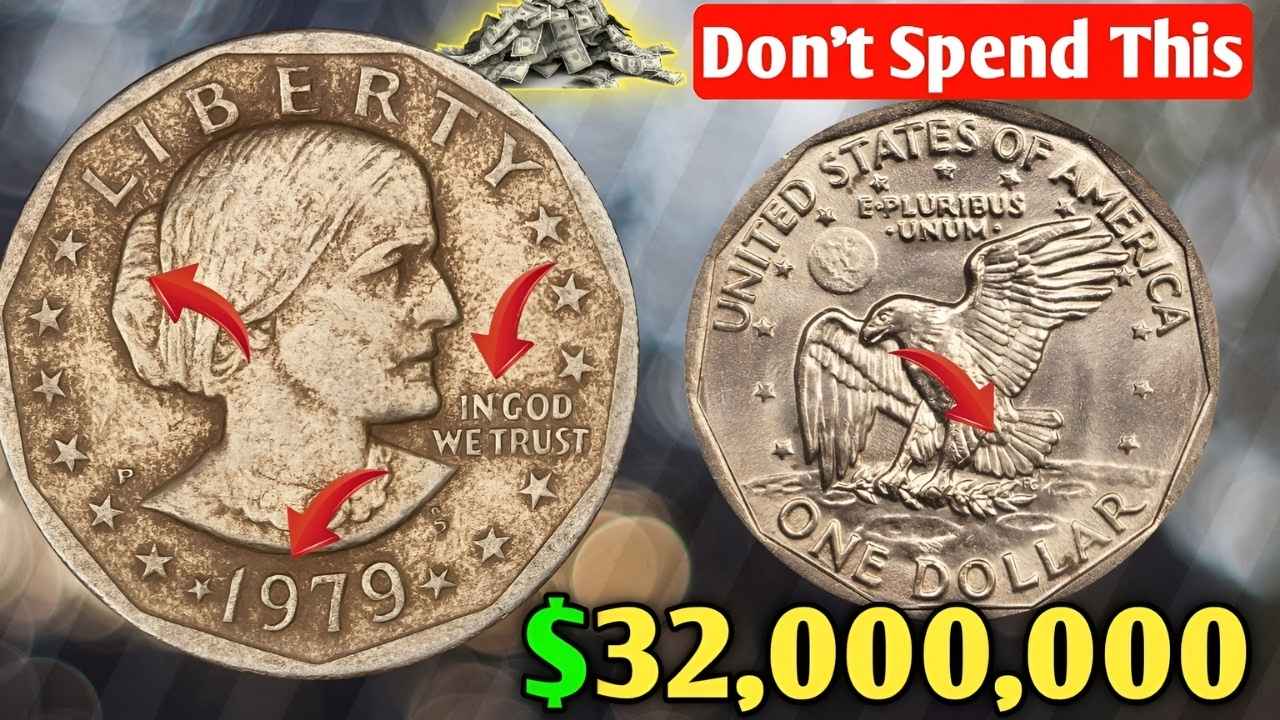
1979-D Susan B. Anthony Dollar: The Susan B. Anthony dollar was introduced in 1979 as a bold attempt to modernize U.S. coinage. The Denver Mint struck millions of these coins, marked with the “D” mintmark. While the series was short-lived, ending in 1981 (with a brief revival in 1999), the 1979-D issue remains a cornerstone for collectors. Its historical significance, combined with certain varieties and conditions, makes it a fascinating coin to study.
Historical Background
The coin honors Susan B. Anthony, a pioneering suffragist who fought tirelessly for women’s rights. The design was intended to replace the larger Eisenhower dollar, offering a smaller, more convenient coin. However, its similarity in size to the quarter led to confusion in circulation, limiting its popularity. Despite this, the coin remains a symbol of progress and an important collectible.

Mintage and Availability
The Denver Mint produced over 288 million Susan B. Anthony dollars in 1979. This high mintage means that most examples are common in circulated condition. However, uncirculated and proof-like specimens, especially those with unique varieties or errors, can command significant premiums.
| Mint | Year | Mintage | Commonness |
|---|---|---|---|
| Denver (D) | 1979 | 288,015,744 | Common in circulation |
| Philadelphia (P) | 1979 | 360,222,000 | Common |
| San Francisco (S) | 1979 | 109,576,000 | Common, but proofs more desirable |
Key Varieties and Errors
Collectors often seek out varieties and minting errors that make certain coins more valuable. For the 1979-D Susan B. Anthony dollar, notable varieties include:

- Wide Rim (Near Date): More commonly associated with the Philadelphia issue, but collectors still check Denver coins for rim variations.
- Clipped Planchets: Coins struck on incomplete blanks.
- Off-Center Strikes: Misaligned strikes that show part of the design missing.
- Double Dies: Doubling in the lettering or date, though rare for the Denver issue.
Value by Condition
The value of a 1979-D Susan B. Anthony dollar depends heavily on its condition. Circulated coins generally hold face value, but uncirculated and high-grade examples are more desirable.
| Grade | Approximate Value |
|---|---|
| Circulated | $1 |
| MS-60 | $2–$5 |
| MS-65 | $15–$25 |
| MS-67 | $100+ |
| Error Varieties | $50–$5,000 depending on rarity |
Collecting Tips
- Focus on Condition: Seek coins in mint state (MS) grades, as these hold the most value.
- Look for Errors: Even minor errors can significantly increase a coin’s worth.
- Storage: Use protective holders to prevent scratches and tarnish.
- Authentication: For rare varieties, consider professional grading services to confirm authenticity and grade.
Market Trends
The market for Susan B. Anthony dollars has remained steady. While common examples are inexpensive, rare varieties and high-grade coins continue to attract strong interest. Auction records show that pristine examples can sell for hundreds or even thousands of dollars, especially when tied to unique errors.
Rarity and Collectibility
Although the 1979-D issue is not rare in general, its collectibility lies in condition and variety. High-grade coins are relatively scarce due to the large number that entered circulation. Error coins, while rare, are highly prized and can elevate the value dramatically.
Conclusion
The 1979-D Susan B. Anthony dollar is a fascinating piece of American numismatic history. While most examples are common and inexpensive, collectors treasure high-grade specimens and rare varieties. For those interested in building a complete set of Susan B. Anthony dollars, the Denver issue is essential. Its blend of history, accessibility, and potential rarity makes it a rewarding coin to study and collect.