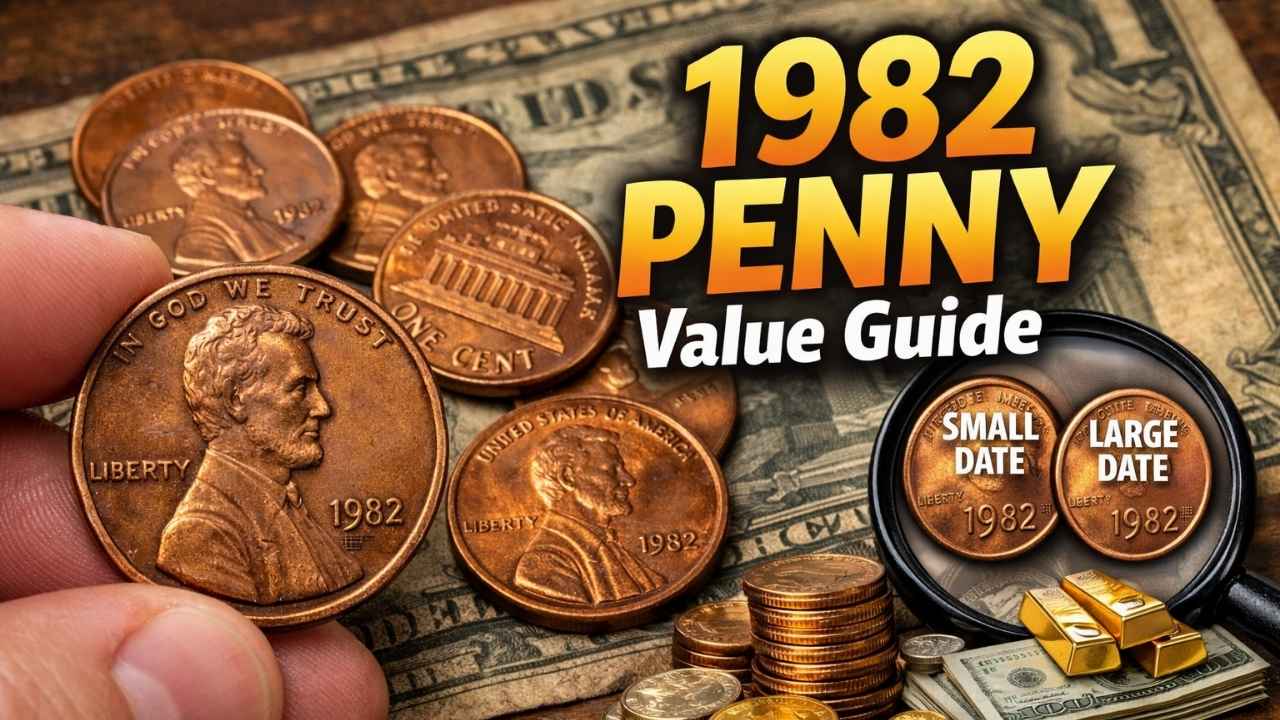
1982 Penny Value Guide: The Lincoln cent has been a cornerstone of American coinage since 1909, when it was first introduced to honor the 100th anniversary of Abraham Lincoln’s birth. By 1982, the coin had already undergone several changes, but this year stands out as one of the most complex and fascinating in the series. Collectors know 1982 as the year when the Mint transitioned from copper to copper-plated zinc, creating multiple varieties that include both large date and small date designs. These differences make 1982 pennies a rich field of study and collecting, with certain varieties commanding significant premiums.
Historical Background
Prior to 1982, Lincoln cents were struck primarily in bronze, composed of 95 percent copper and 5 percent zinc and tin. Rising copper prices made it more expensive to produce pennies than their face value, prompting the Mint to switch to a cheaper composition. Beginning in 1982, pennies were struck in copper-plated zinc, with a core of 97.5 percent zinc and a thin layer of copper. This transition created a unique situation where both copper and zinc pennies were minted in the same year, along with variations in date size.

Large Date vs. Small Date Varieties
The 1982 Lincoln cent exists in two main date styles: large date and small date. The difference lies in the font and spacing of the numerals in the year. Large date pennies have thicker, more prominent numerals, while small date pennies feature thinner, more delicate numerals. These varieties were produced in both copper and zinc compositions, creating a total of seven distinct varieties:
- 1982 Large Date Copper
- 1982 Small Date Copper
- 1982 Large Date Zinc
- 1982 Small Date Zinc
- 1982-D Large Date Copper
- 1982-D Small Date Copper
- 1982-D Large Date Zinc
Notably, no 1982-D small date zinc pennies are officially confirmed, though rumors persist of rare examples.

Mint Marks and Their Importance
Mint marks indicate where a coin was produced. For 1982 pennies, two mints were involved:
- No Mint Mark (Philadelphia): These coins were struck at the Philadelphia Mint.
- D Mint Mark (Denver): Coins struck in Denver carry a “D” mint mark.
Mint marks are crucial for identifying varieties and determining rarity.
Collector Value by Condition
The value of a 1982 penny depends heavily on its condition, composition, and variety. Circulated coins are generally worth face value, but uncirculated and rare varieties can command much higher prices. Below is a table summarizing typical values across grades and varieties.
| Variety | Composition | Circulated Value | MS-63 | MS-65 | MS-67 | Auction Record |
|---|---|---|---|---|---|---|
| 1982 Large Date Copper | Copper | $0.01–$0.05 | $2 | $5 | $25 | $1,000+ |
| 1982 Small Date Copper | Copper | $0.01–$0.10 | $5 | $15 | $75 | $2,000+ |
| 1982 Large Date Zinc | Zinc | $0.01–$0.05 | $2 | $5 | $20 | $800+ |
| 1982 Small Date Zinc | Zinc | $0.01–$0.10 | $5 | $20 | $100 | $1,500+ |
| 1982-D Large Date Copper | Copper | $0.01–$0.05 | $2 | $5 | $25 | $900+ |
| 1982-D Small Date Copper | Copper | $0.01–$0.10 | $5 | $15 | $75 | $1,200+ |
| 1982-D Large Date Zinc | Zinc | $0.01–$0.05 | $2 | $5 | $20 | $700+ |
Rare Errors and Varieties
Error coins add another layer of excitement for collectors. The 1982 penny has several notable errors:

- Double Die Obverse: Some pennies show doubling in Lincoln’s profile or inscriptions.
- Off-Center Strikes: Coins struck off-center can range in value depending on how dramatic the error is.
- Clipped Planchets: A clipped planchet error occurs when part of the coin’s edge is missing.
- Transitional Errors: Rare examples exist where copper planchets were mistakenly used for varieties intended to be zinc.
Factors That Influence Value
Several factors determine the value of a 1982 penny:
- Condition: Coins graded by professional services such as PCGS or NGC carry higher premiums.
- Composition: Copper pennies are generally more desirable than zinc.
- Variety: Small date varieties are scarcer and more valuable than large date.
- Market Demand: Coin values fluctuate based on collector interest and market trends.
Collecting Strategies
For collectors, the 1982 penny offers multiple avenues of interest. Beginners may start by collecting circulated examples from pocket change, while advanced collectors seek high-grade proofs or rare errors. Building a complete set of all seven varieties is a rewarding challenge. Many collectors also enjoy searching rolls of pennies from banks, hoping to uncover hidden gems.

Investment Potential
While most 1982 pennies are not worth more than face value, rare varieties and pristine examples can appreciate significantly. Coins graded MS-67 or higher are scarce and often sell for hundreds of dollars. Small date copper pennies in high grades are especially desirable, with values reaching into the thousands. As with all collectibles, investment potential depends on rarity, condition, and long-term demand.
Conclusion
The 1982 Lincoln cent is one of the most complex and fascinating coins in American numismatics. With its transition from copper to zinc, large date and small date varieties, and rare errors, it offers collectors a wealth of opportunities. Whether you are searching through pocket change or building a high-grade collection, understanding the nuances of this coin can help you uncover hidden value. For many numismatists, the 1982 penny represents not just a piece of currency but a tangible link to America’s coinage history.