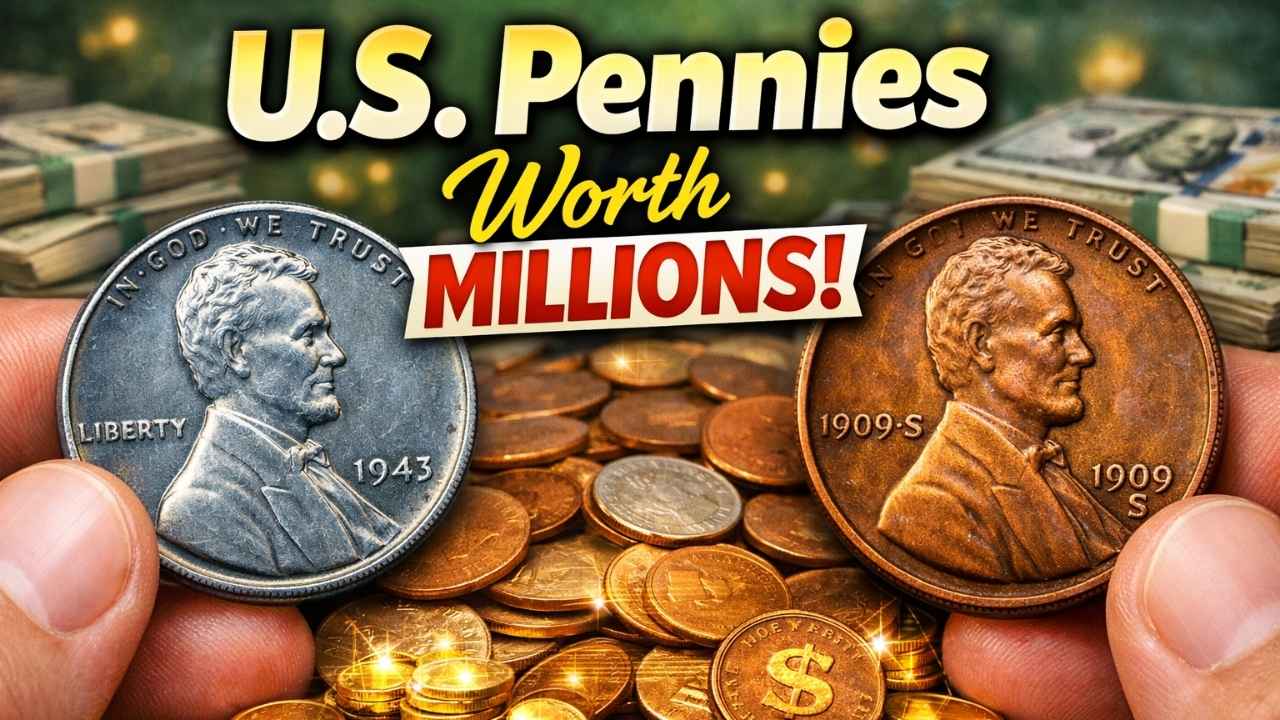
U.S. Pennies Worth Millions: There is something quietly fascinating about the humble penny. Small, copper-toned, and often overlooked at the bottom of a jar or pocket, it hardly seems capable of changing a life. Yet in the world of coin collecting, certain United States pennies have sold for sums that most people associate with lottery wins or property deals. A single coin, originally worth just one cent, has in some cases fetched hundreds of thousands or even millions of dollars.
For collectors and investors alike, rare pennies represent more than old currency. They tell stories of war, minting errors, historical shifts, and economic change. In the right condition and with the right backstory, a penny can become a serious financial asset. Some of these coins have already funded retirements, bought homes, and secured futures.

This article explores the most valuable U.S. pennies ever discovered, why they are so rare, and how you might identify one hiding in your own collection.
Why Some Pennies Are Worth a Fortune
Not all old coins are valuable. Age alone does not guarantee wealth. Several key factors determine whether a penny is worth a single cent or a staggering sum.

Rarity is the first and most important factor. If very few examples of a coin were produced or survived, collectors will compete fiercely to obtain one.
Condition is equally crucial. Coins are graded on a scale that ranges from heavily worn to perfect uncirculated condition. A coin with sharp details, original lustre, and minimal damage can be worth many times more than a worn example of the same issue.
Minting errors also play a significant role. Sometimes mistakes at the mint create unusual variations. These errors were never meant to exist, and that unintended nature often makes them highly desirable.
Historical significance adds further appeal. Coins connected to pivotal moments in American history, such as wartime production changes, carry a narrative that collectors value.
When rarity, condition, error, and history combine, the result can be extraordinary.
The 1943 Bronze Lincoln Penny
One of the most famous and valuable pennies in American numismatic history is the 1943 bronze Lincoln cent. During the Second World War, copper was needed for ammunition and military equipment. In 1943, the United States Mint produced pennies using zinc-coated steel instead of copper.
However, a small number of bronze planchets from 1942 were accidentally left in the presses. These planchets were struck with 1943 dies, creating a handful of bronze 1943 pennies that were never meant to exist.
The 1943 bronze cent featuring Abraham Lincoln has sold for more than one million dollars at auction. Only a tiny number are known to survive, making it one of the rarest coins in American history.
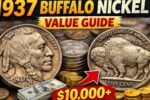
Collectors have searched pocket change for decades hoping to find one. Although most 1943 pennies are steel and relatively common, the bronze version is a life-changing discovery.
The 1909-S VDB Lincoln Cent
In 1909, the United States introduced the Lincoln cent to commemorate the 100th anniversary of Abraham Lincoln’s birth. The coin was designed by Victor David Brenner, whose initials VDB appeared prominently on the reverse.

Public criticism over the size and placement of the initials led to their removal shortly after production began. Coins minted in San Francisco bearing both the S mint mark and the VDB initials were produced in limited numbers before the design change.
The 1909-S VDB cent has since become one of the most sought-after coins in the series. High-grade examples can command tens of thousands of pounds at auction, and exceptional specimens have reached six figures.
Its value stems from low mintage, design controversy, and its position as the first year of the Lincoln cent series.
The 1955 Doubled Die Penny
Minting errors have always fascinated collectors, and few are as dramatic as the 1955 doubled die Lincoln cent. On this coin, the date and lettering appear clearly doubled, creating a bold and unmistakable visual effect.
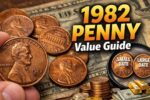
The error occurred during the die creation process. When the die received two slightly misaligned impressions, every coin struck from it carried the doubling.
Unlike subtle mint errors that require magnification, the doubling on the 1955 cent is visible to the naked eye. Thousands entered circulation before the mistake was discovered, and many were spent as normal currency.
Today, well-preserved examples regularly sell for thousands, and top-grade coins can exceed one hundred thousand dollars.
The 1944 Steel Penny
Following the steel penny experiment in 1943, the Mint returned to copper in 1944. However, just as bronze planchets accidentally appeared in 1943, a few leftover steel blanks were struck with 1944 dies.
The result was the 1944 steel cent, an extremely rare transitional error. Only a small number are known, and their value mirrors that of the 1943 bronze cent in significance, though usually slightly lower in price.
Collectors prize transitional errors because they represent a moment of change in production methods. These coins offer tangible evidence of history in transition.
Record-Breaking U.S. Pennies
Below is a table highlighting some of the most famous and valuable U.S. pennies and their approximate peak sale prices.
| Coin | Year | Key Feature | Approximate Top Sale Price |
|---|---|---|---|
| 1943 Bronze Lincoln Cent | 1943 | Copper instead of steel | Over $1,000,000 |
| 1944 Steel Lincoln Cent | 1944 | Steel instead of copper | Over $300,000 |
| 1909-S VDB Lincoln Cent | 1909 | Low mintage with VDB initials | $100,000+ |
| 1955 Doubled Die | 1955 | Strong doubled lettering | $100,000+ |
| 1877 Indian Head Cent | 1877 | Very low mintage | $200,000+ |
These figures vary depending on condition and auction demand, but they illustrate how extraordinary a one-cent coin can become.
The 1877 Indian Head Cent
Before the Lincoln design, the Indian Head cent dominated American coinage. Among these, the 1877 issue stands out as particularly rare due to extremely low mintage numbers during an economic downturn.
High-grade examples of the 1877 Indian Head cent are scarce, and collectors building complete date sets often compete intensely for them. Prices have climbed steadily over the decades, making this coin a favourite among serious numismatists.
Its scarcity is genuine rather than accidental, which adds to its enduring appeal.
How to Identify a Potentially Valuable Penny
If you are inspired to check your change jar, begin with the date. Certain years immediately signal potential value.
Next, examine the mint mark. Coins minted in San Francisco often carry an S, while Denver coins have a D. Some rare pennies were produced in smaller quantities at specific mints.
Look carefully for errors such as doubling, off-centre strikes, or unusual metal colour. A 1943 penny that sticks to a magnet is steel and common. One that does not stick may warrant professional testing.
Condition matters enormously. Avoid cleaning coins, as this can drastically reduce their value. Even light polishing can remove original surfaces and damage collectability.
Professional grading services can authenticate and grade valuable finds, providing a sealed holder that confirms authenticity and condition.
Could a Penny Really Fund Your Retirement
It might sound dramatic, but in rare cases, yes. A penny worth one million dollars, if invested wisely, could generate substantial income. Even coins worth tens of thousands can provide meaningful financial security.
However, it is important to approach coin collecting with realism. The vast majority of pennies in circulation are worth face value. The dream of discovering a million-dollar coin should be balanced with education and patience.
Serious collectors often spend years studying mint records, grading standards, and market trends. Knowledge is the most reliable tool in numismatics.
The Role of Auctions and Market Demand
Auction houses have played a major role in driving record prices. When two determined collectors compete for a rare specimen, prices can escalate quickly.
Media coverage of high-profile sales fuels further interest. Stories of schoolchildren discovering rare pennies or inherited collections selling for vast sums capture public imagination.
Market demand can fluctuate, but historically significant coins with confirmed rarity tend to maintain strong long-term value.
Storing and Protecting Rare Coins
If you believe you have discovered a valuable penny, proper storage is essential. Coins should be kept in protective holders that prevent exposure to air, moisture, and physical damage.
Avoid handling coins directly by their surfaces. Hold them by the edges and consider using cotton gloves.
Environmental stability is important. Excess humidity can cause corrosion, while extreme temperature changes may lead to deterioration over time.
Professional appraisal is advisable before selling or insuring a high-value coin.
Building a Collection with Investment in Mind
While discovering a rare penny in change is thrilling, many collectors build wealth more deliberately. Purchasing key dates in strong condition and holding them long-term can yield steady appreciation.
Research is critical. Understanding grading standards, mint history, and population reports allows informed decision-making.
Diversification is also wise. Rather than relying on a single rare coin, some investors build broader collections across different years and types.
The emotional enjoyment of collecting often proves just as rewarding as financial gain.
Final Thoughts
The idea that a small copper coin could transform someone’s financial future is undeniably captivating. From wartime minting errors to controversial design changes, rare U.S. pennies combine history, scarcity, and human curiosity in a uniquely powerful way.
Most pennies will never be worth more than one cent. Yet the possibility that one extraordinary coin might be hiding in plain sight continues to inspire collectors around the world.
Whether you are an experienced numismatist or simply curious about the contents of your spare change, it costs nothing to look a little closer. In rare cases, that closer look has changed lives.
The next time you receive a penny in change, pause before you spend it. You never know what history, and perhaps what fortune, might be resting in the palm of your hand.